As soon as the train Mangla Express reached Kozhikode (Calicut), I heard the loudspeaker ring out “Mr. Alkesh Kumar Sharma IAS may please report near the Exit at Platform Number 1.” In Kerala (now Keralam), announcements at railway stations are normally made in Malayalam – however, for my understanding, they were in English. I reached the Exit Gate and found a person holding a placard with my name. After completing almost a year at the LBSNAA academy in Mussoorie, I was visiting Kerala for the first time to join my district training. Mr Michael Vetha Siromony, District Collector Wayanad, had sent a Jeep to pick me up from the Railway Station which was about 75 kms away from Kalpetta, the District Headquarters. I was taken to Hotel Alakapuri, where we had vegetarian lunch before proceeding to Kalpetta, reaching there in about 3 hours.
As we moved uphill, my mind was full of vivid memories, right from my civil service examination to selection in IAS in 1990, to my subsequent training. I was nostalgic about how I moved from a corporate job to the social sector, and then the civil service. Cadre allocation in All India Services (IAS, IPS and IFoS) is an important exercise which keeps probationers busy guessing who is going to get which cadre. Some cadres were perceived as ‘Good’, some ‘not so Good’ and then there were a few falling in the ‘Others’ category – Kerala being one of those. Probationers who were allocated the ‘Other’ cadres were seen being consoled by those who got ‘Good’ cadres. Other than the initial shock of getting an ‘Other’ cadre, especially since I had a good rank and cadre allocation pandits in the academy had assured me one of the central Indian cadres, I was not quite bothered by my allocation. I was in for another surprise when I was appointed Assistant Collector (Under Training) in Wayanad in June 1991, which according to my counsellor in the Academy, was not a regular training district. Mr Michael later told me how he managed to convince the Chief Secretary and got me to work with him there on the condition that I would remain there as long as he was posted as Collector in Wayanad.
As we travelled , everything around me seemed new. Nestled amidst mist-covered hills, dense forests, and sprawling tea plantations, Wayanad was unlike any place I had known in North India. The language, the culture, the rhythm of life, and most surprisingly, the food, were all unfamiliar. Around 5 PM I reached PWD Rest House Kalpetta, my training abode for the next year.
And then came the first cultural surprise – not in the office, but at the breakfast table.
Accustomed to beginning my mornings with parathas, poha, bread, or perhaps puri and sabzi, I was served a tall, white cylinder of steamed rice flour accompanied by a bowl of black chickpea curry. Waiter cheerfully announced, “This is Puttu.”
I looked at it with curiosity. It resembled nothing I had ever eaten. Dry-looking, crumbly, and completely devoid of the familiar aroma of wheat or spices, it hardly inspired confidence. My first instinct was to wonder whether this could really be breakfast. I cautiously broke off a piece, mixed it with the richly spiced chickpea masala, and took my first bite. It was pleasant enough, but certainly not love at first taste.
For the next few days, Puttu continued to make regular appearances. Sometimes it came with kadala (black chickpea) curry, and at other times with a perfectly boiled Kerala banana. I found the combination unusual. Rice with chickpeas? Rice with banana? To my North Indian palate, it seemed an unlikely pairing.
Yet Wayanad had a way of teaching patience—not only with its people and traditions, but also with its cuisine.
Gradually, I stopped comparing Puttu with the breakfasts I had grown up with. Instead, I began appreciating it on its own merits. The soft, steamed rice flour blended beautifully with the spicy chickpea masala, each crumb soaking up the rich gravy. The sweetness of the boiled banana complemented the mild flavour of the Puttu surprisingly well, creating a satisfying and wholesome meal.
What had initially seemed bland, now tasted comforting.
Over time, Puttu transformed from an unfamiliar local dish into one of my favourite breakfasts. I realised why generations of Malayalis cherished it. It was light on the stomach, yet filling enough to sustain a busy morning. There was no excess oil, no elaborate preparation, just the simple goodness of steamed rice paired with protein-rich chickpeas or nutritious bananas.
Looking back, my first encounter with Puttu was about much more than discovering a new recipe. It was an introduction to Kerala itself—a reminder that every culture has its own flavours, traditions, and wisdom. Sometimes, the unfamiliar only needs a little time before it becomes familiar, and eventually, beloved.
Even today, whenever I come across a plate of Puttu with kadala curry or a boiled Kerala banana, I am transported back to those early days in Wayanad in 1991. It reminds me of my first posting, my first lessons in adapting to a new land, and how embracing local traditions enriched not only my culinary tastes but also my understanding of the people I had come to serve.
Not only did I end up loving the cuisine of Kerala, I also fell in love with my Cadre, the people there, and ofcourse – my beloved Mundu, the traditional Dhoti I wore every Saturday (even in office!).
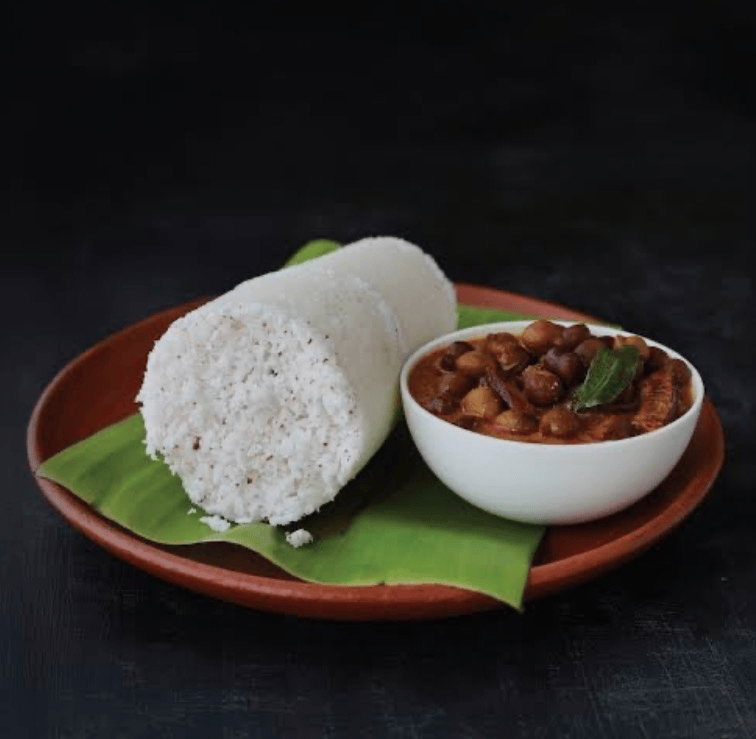
Image: Puttu- Kerala Tourism


 Beyond the Files- by Alkesh Sharma
Leave a comment